Introduction
Spider bites are often surrounded by fear and confusion. Many people assume that any unexplained skin irritation is caused by a spider, but in reality, true spider bites are relatively rare. However, when they do occur, they can range from mild and harmless to more serious conditions requiring medical attention.
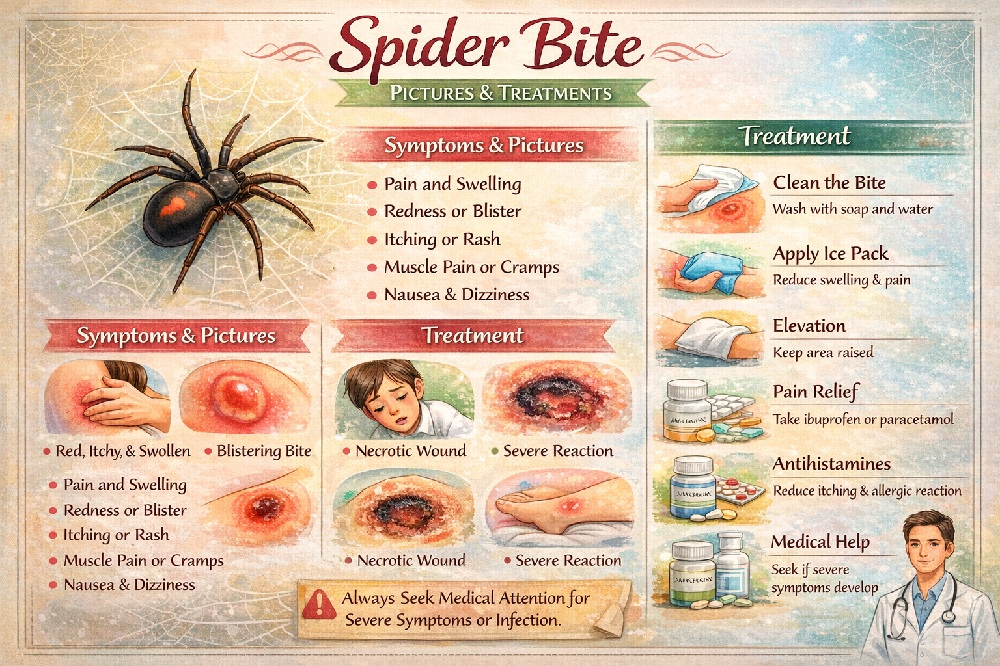
Understanding how spider bites look, what symptoms they cause, and how to treat them is essential for proper care and peace of mind. In this comprehensive guide, we’ll explore spider bite pictures (for visual identification), symptoms, types of spiders, treatment methods, and when to seek medical help.
What Does a Spider Bite Look Like?


7
Spider bites can vary significantly in appearance depending on the species and the body’s reaction.
Common Visual Signs
- Red, inflamed bump
- Swelling around the bite area
- Itching or irritation
- Two small puncture marks (not always visible)
- Blister or ulcer in severe cases
In many mild cases, spider bites resemble mosquito bites or small allergic reactions.
Common Symptoms of Spider Bites
The symptoms of a spider bite depend on whether the spider is venomous or non-venomous.
Mild Symptoms
- Redness
- Itching
- Minor swelling
- Slight pain
Moderate Symptoms
- Increased swelling
- Burning sensation
- Muscle pain near the bite
- Fever (in some cases)
Severe Symptoms (Rare)
- Severe pain
- Cramping
- Nausea or vomiting
- Difficulty breathing
- Tissue damage (necrosis)
If severe symptoms appear, immediate medical attention is necessary.
Types of Spider Bites
1. Non-Venomous Spider Bites


7
Most spiders are harmless to humans. Their bites usually cause minor irritation that goes away within a few days.
2. Venomous Spider Bites
Some spiders can cause serious reactions.
a. Black Widow Spider Bite


7
Symptoms:
- Sharp pain at bite site
- Muscle cramps
- Abdominal pain
- Sweating
b. Brown Recluse Spider Bite


7
Symptoms:
- Mild pain initially
- Blister formation
- Skin tissue damage (necrosis)
- Slow healing wound
First Aid Treatment for Spider Bites
If you suspect a spider bite, follow these steps immediately:
1. Clean the Area
Wash the bite with soap and water to prevent infection.
2. Apply Ice
Use a cold compress to reduce swelling and pain.
3. Elevate the Area
If possible, keep the affected area raised.
4. Avoid Scratching
Scratching can worsen irritation and lead to infection.
5. Take Pain Relief
Over-the-counter medications can help reduce pain.
Medical Treatments
For more serious bites, medical treatment may be required.
Common Medical Options
- Antibiotics (if infection develops)
- Antihistamines (for allergic reactions)
- Pain relievers
- Antivenom (in rare severe cases)
Always consult a doctor if symptoms worsen.
Home Remedies for Spider Bites
Some natural remedies may help relieve mild symptoms:
- Aloe vera – soothing effect
- Baking soda paste – reduces itching
- Turmeric paste – anti-inflammatory
- Honey – antibacterial properties
These remedies are suitable only for mild bites.
When to See a Doctor
Seek medical help immediately if you notice:
- Severe pain or spreading redness
- Fever or chills
- Difficulty breathing
- Open wound or ulcer formation
- Signs of infection (pus, swelling)
Children, elderly individuals, and people with weak immune systems should be extra cautious.
How to Identify a Spider Bite vs Other Bites
Spider bites are often confused with other insect bites.
Key Differences
- Spider bites may show two puncture marks
- Mosquito bites are usually itchy and raised
- Bed bug bites appear in clusters
- Allergic reactions may spread quickly
Correct identification helps in proper treatment.
Prevention Tips
Preventing spider bites is easier than treating them.
At Home
- Keep your home clean and clutter-free
- Seal cracks and gaps
- Shake clothes and shoes before wearing
Outdoors
- Wear protective clothing
- Avoid dark, undisturbed areas
- Use insect repellents
Are Spider Bites Dangerous?
Most spider bites are not dangerous and heal on their own. However, bites from venomous spiders can be serious if not treated promptly.
The key is early identification and proper care.
Healing Time of Spider Bites
- Mild bites: 2–5 days
- Moderate bites: 1–2 weeks
- Severe bites: Several weeks or longer
Proper care can speed up recovery.
Myths About Spider Bites
Myth 1: All spider bites are dangerous
Fact: Most are harmless.
Myth 2: You always see two puncture marks
Fact: Not always visible.
Myth 3: Spider bites are common
Fact: Many suspected bites are actually other skin issues.
Conclusion
Spider bites can look alarming, but most are harmless and easy to treat at home. Understanding their appearance, symptoms, and treatment options can help you respond calmly and effectively.
Always monitor the bite for changes, and don’t hesitate to seek medical help if symptoms worsen. With proper care and awareness, spider bites can be managed safely and efficiently.
